Memory Sharding for Scalable Agent Collectives
Building distributed cognitive memory for multi-agent ecosystems. Learn how memory sharding solves context collisions, slow retrieval, and redundant embeddings in large-scale agent systems.
Page 8 of 18
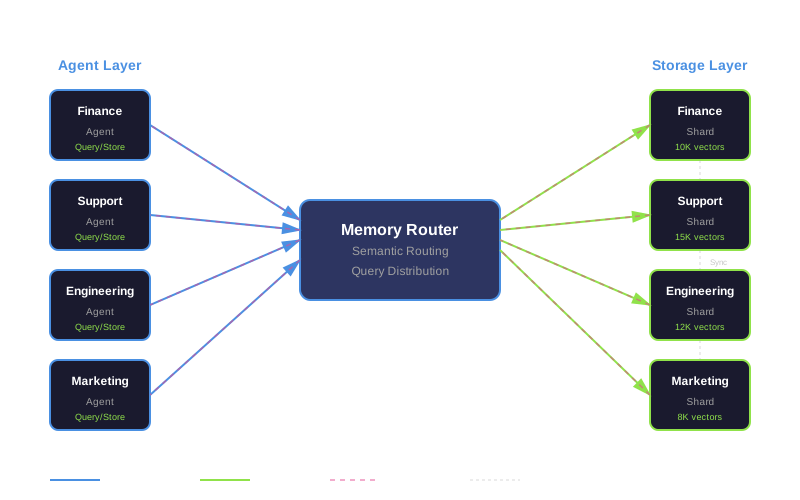
Building distributed cognitive memory for multi-agent ecosystems. Learn how memory sharding solves context collisions, slow retrieval, and redundant embeddings in large-scale agent systems.
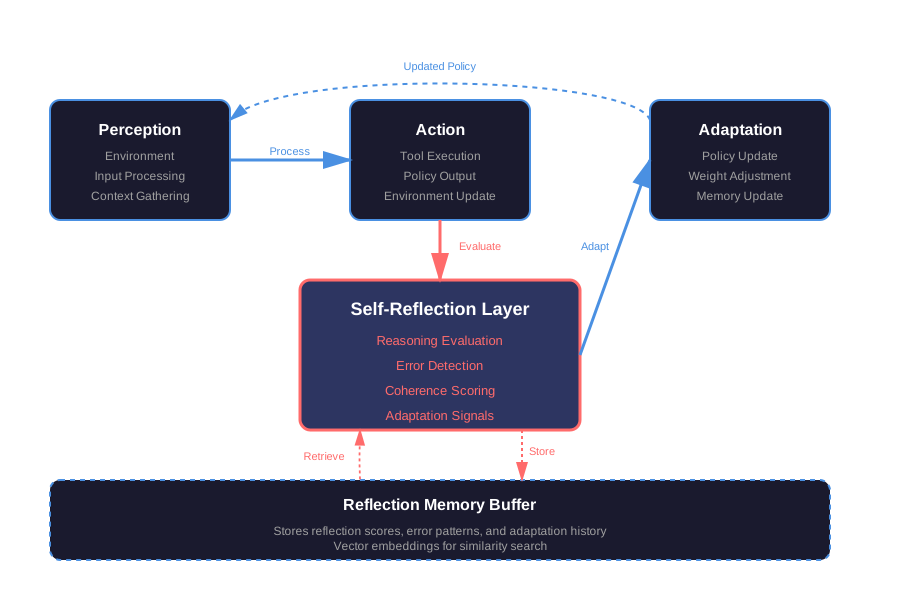
How AI agents can evaluate and adjust their own reasoning loops dynamically using internal reflection models. Practical guide to building agents that self-correct and adapt in real-time.
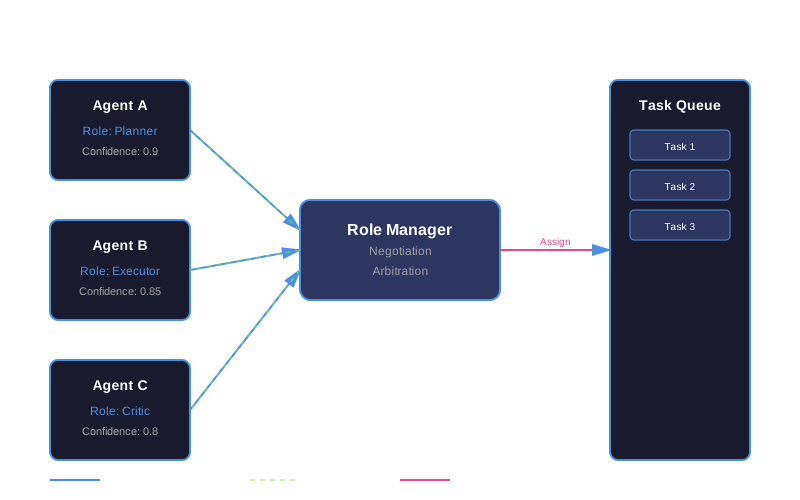
How autonomous AI agents can dynamically negotiate and adapt roles in real-time collaborations using LLM-driven role arbitration and reinforcement learning. Practical guide to building self-organizing agent teams.
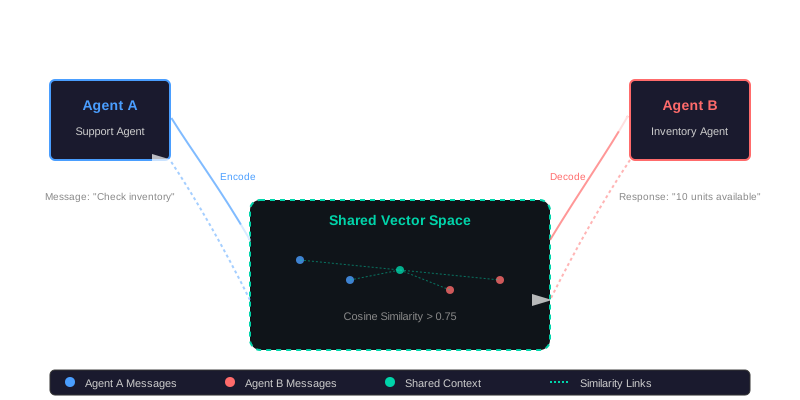
How AI agents can communicate through shared vector spaces instead of brittle API schemas. Learn to build Vector-Space Protocols (VSPs) that enable semantic interoperability and emergent cooperation in multi-agent systems.
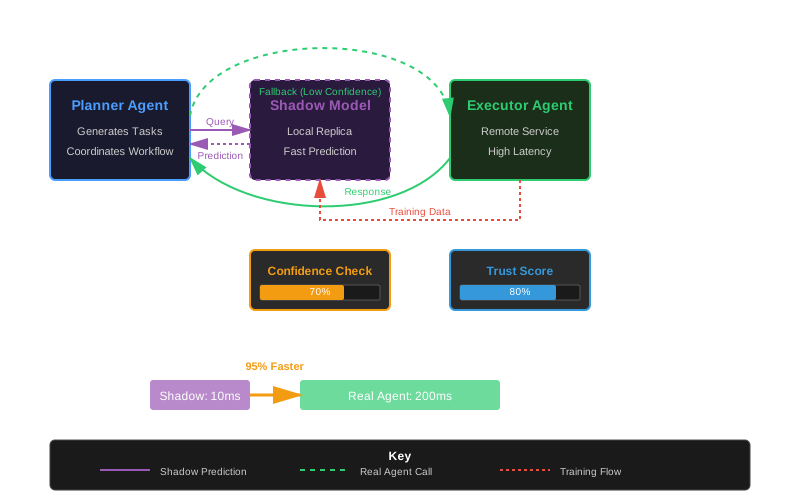
How to build lightweight local replicas that predict remote agent responses to cut coordination latency in multi-agent workflows. Practical guide to shadow models with Python examples.
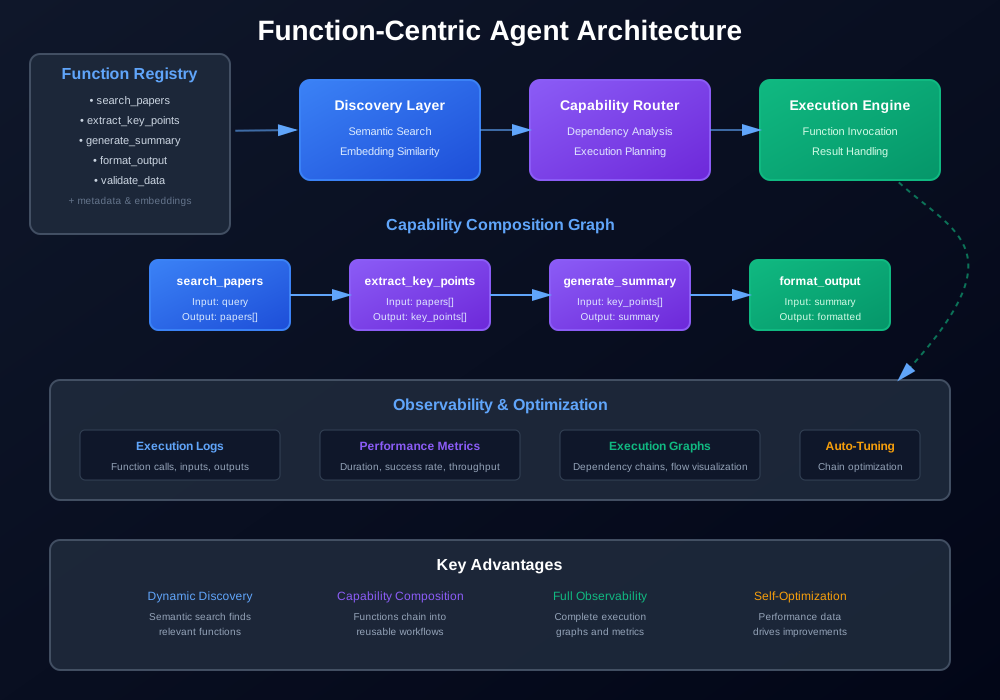
How function-centric architectures enable AI agents to dynamically discover, adapt, and chain capabilities into reusable graphs. Learn to build composable, observable, and self-optimizing agent systems that go beyond static tool invocation.
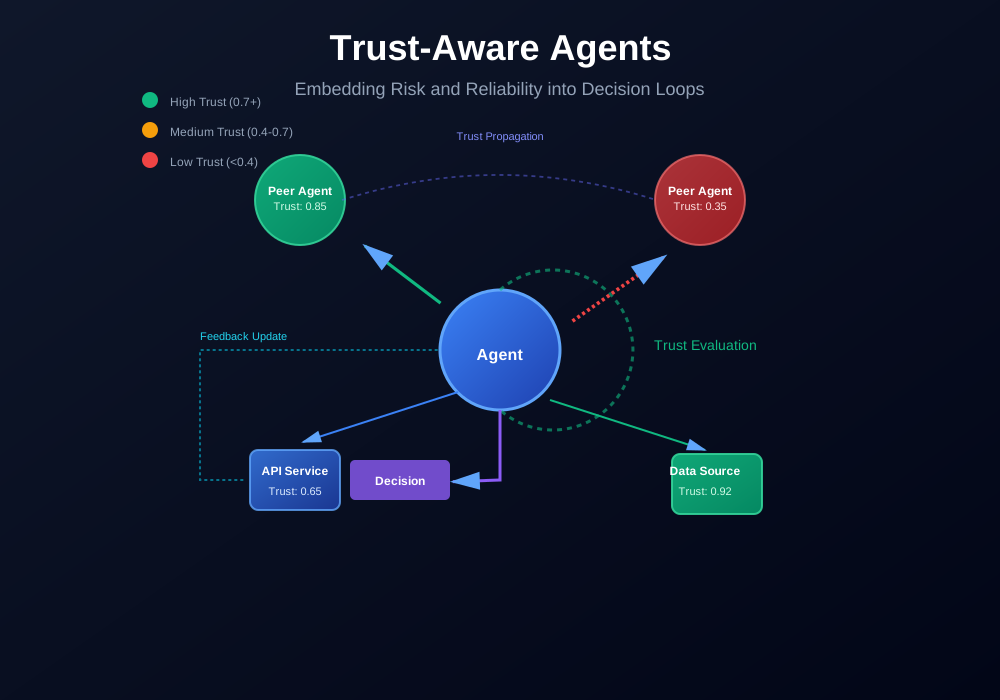
How trust-aware agents make better decisions by evaluating reliability of data sources, peer agents, and tools. Learn to build trust scoring models, integrate trust into cognitive loops, and create systems that adapt based on reliability.
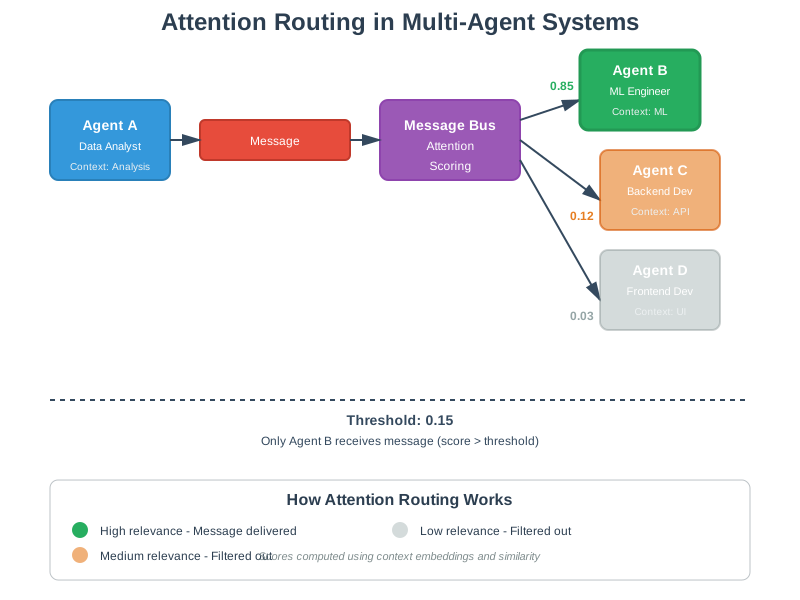
How attention routing — inspired by transformer-based attention mechanisms — improves collaboration, context awareness, and decision efficiency in multi-agent architectures.
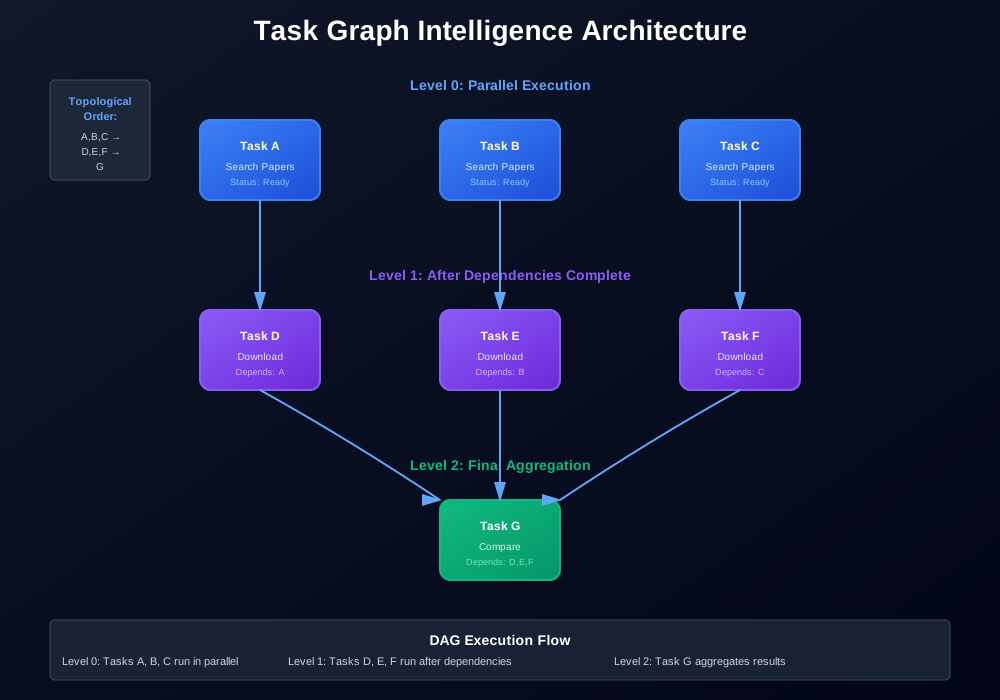
How Directed Acyclic Graph (DAG) structures enable parallelized reasoning, dependency resolution, and self-healing workflows in AI agents. Learn to build dynamic task graphs that adapt to failures and optimize execution.
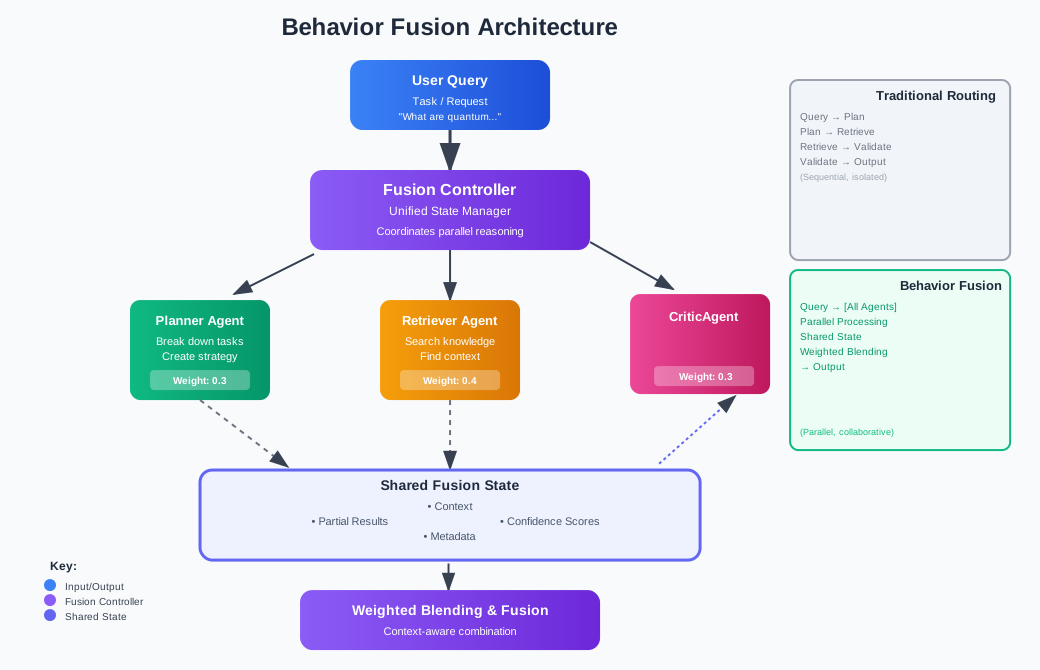
How to blend multiple reasoning intents within a single AI agent context. Learn about behavior fusion patterns, fusion weights, and unified state management for adaptive agent systems.